The Lab
Bench, rack, and instruments
A purpose-built basement workshop for performance work and hardware restoration.
Electronics and repair bench
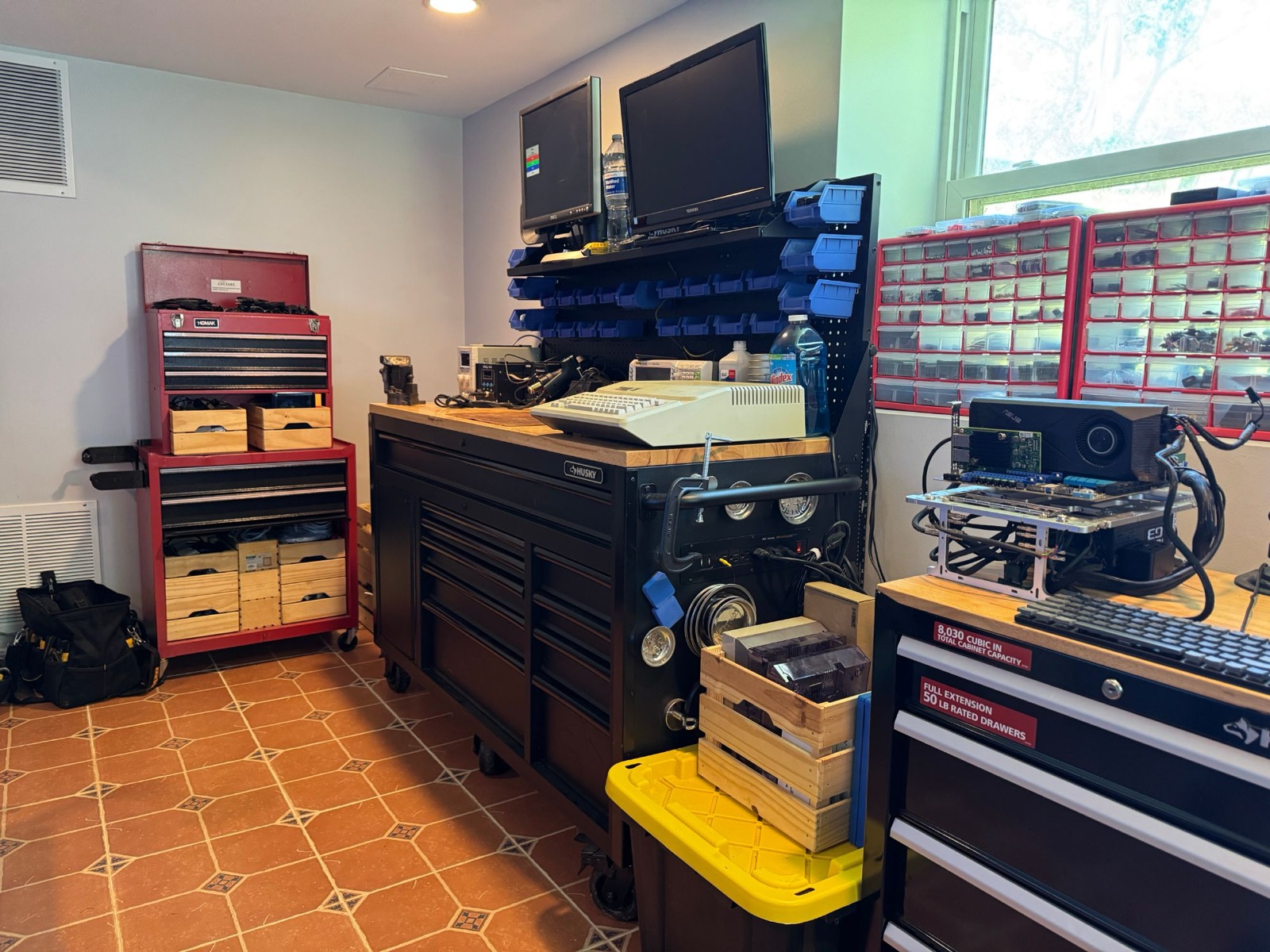
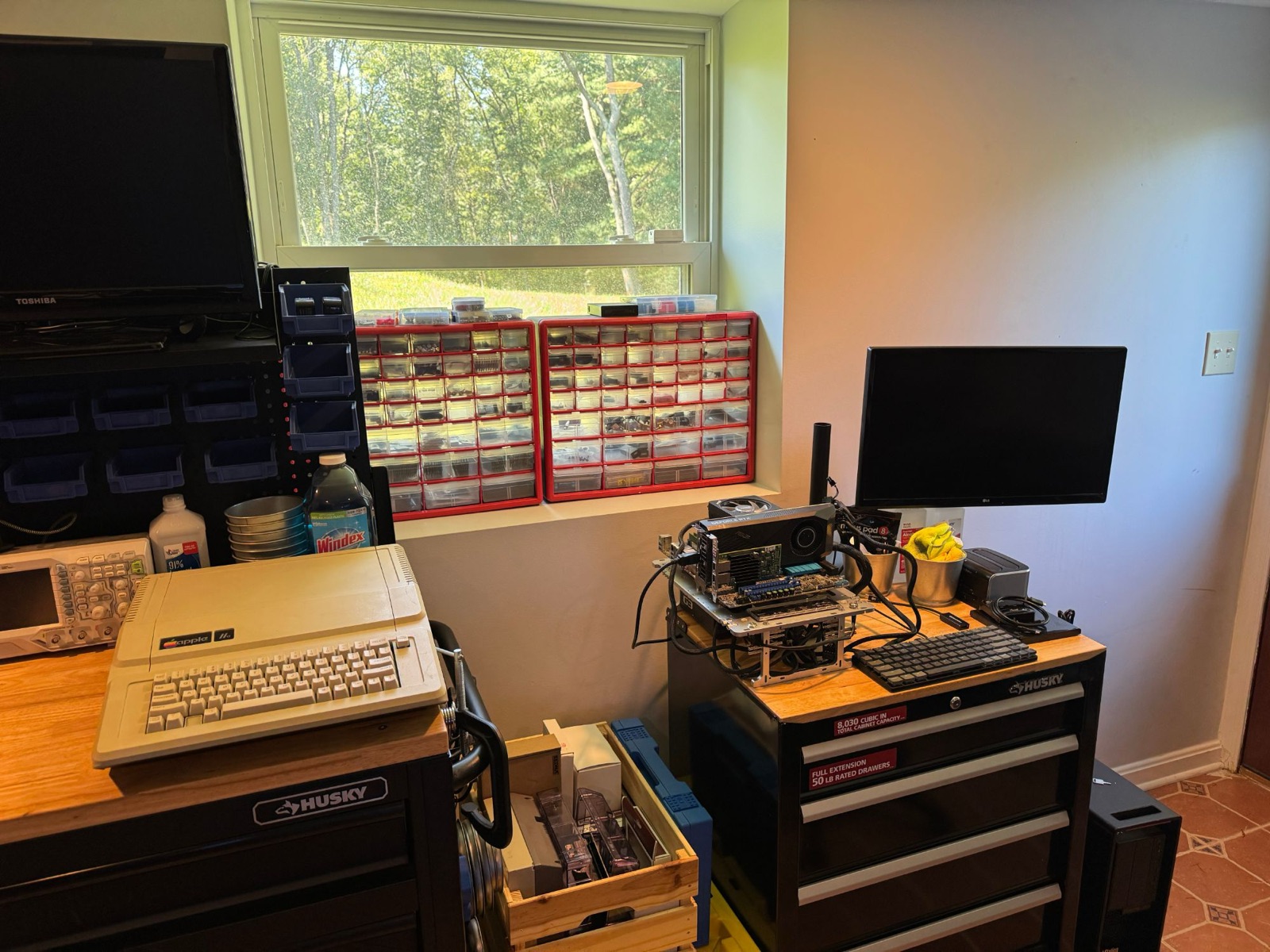
The main bench is set up for board-level work — a programmable bench power supply, soldering and hot-air rework stations, an oscilloscope, and wall-mounted parts organizers stocked with the small components that vintage machines consume: capacitors, voltage regulators, fuses, and connector hardware. An open-frame test bench beside it holds whatever motherboard is currently under diagnosis, so boards can be brought up and probed outside a case.
Compute
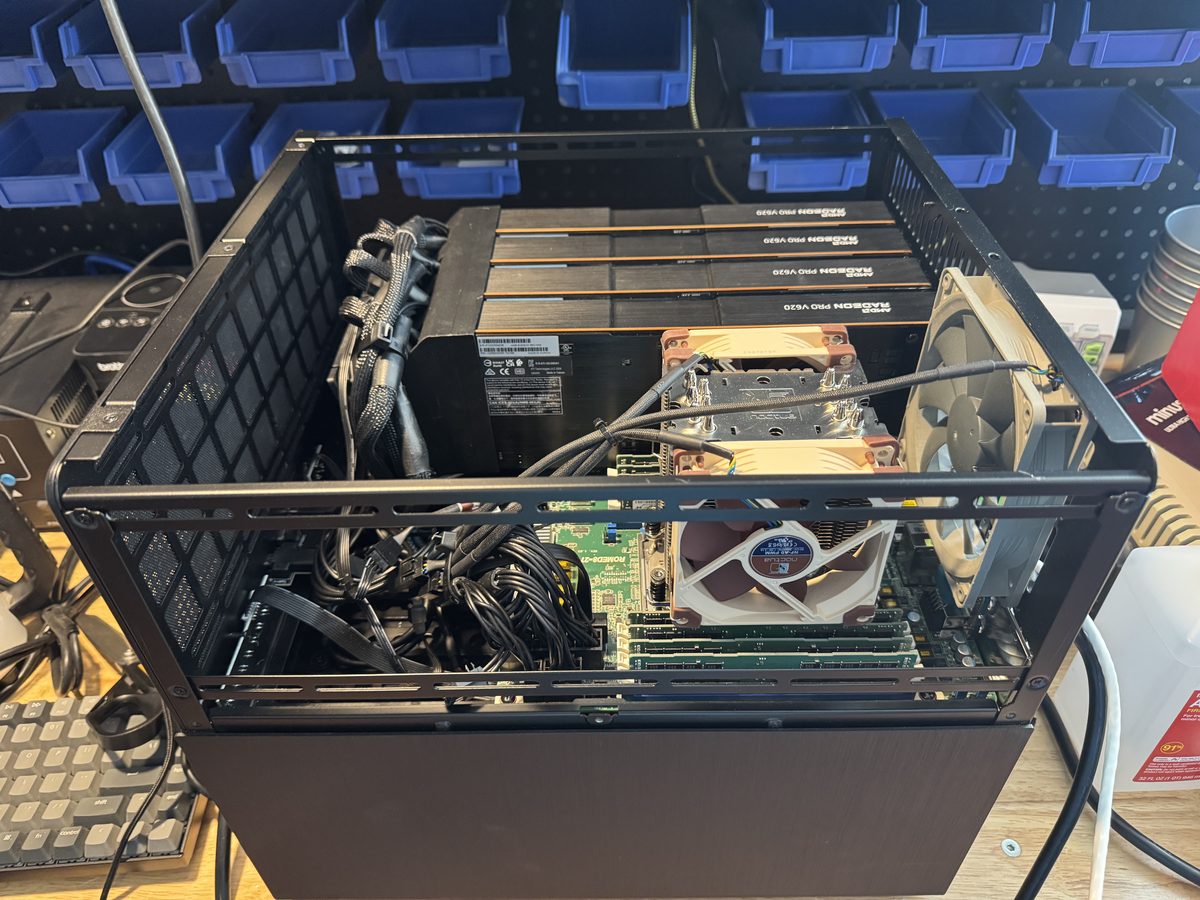
Modern compute lives in a mobile rack: a virtualization host with hot-swap storage on a UPS, plus the custom-built machines used for the performance experiments written up here — including Galactus, the EPYC inference server. The ongoing measurements from these machines are published in the LLM Performance Engineering Notebook.
Staging and burn-in
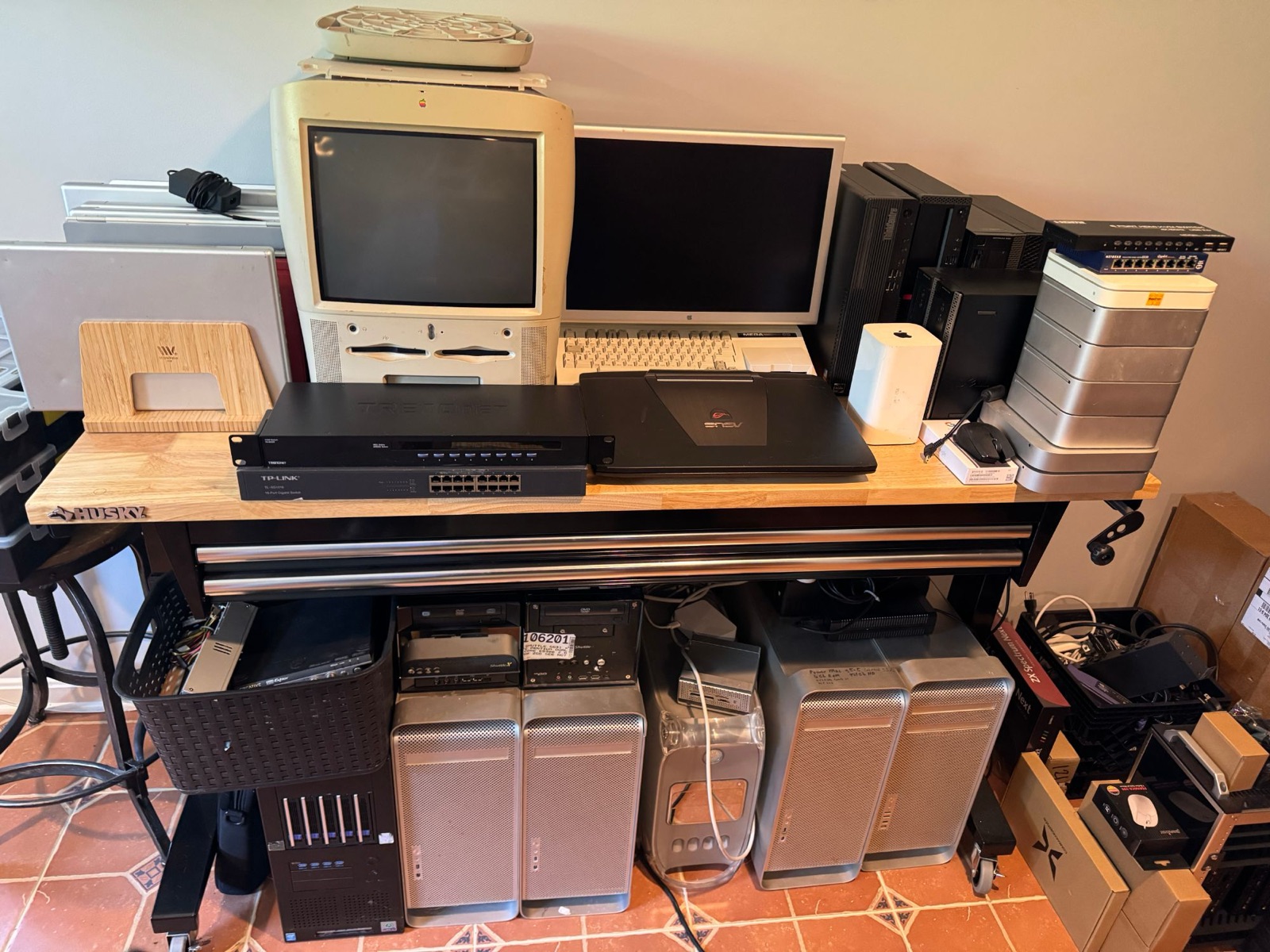
A second bench stages machines that are between arrival and restoration — network switches and a KVM for bringing several systems up at once, with recently finished machines shelved below.